


Periodontal Maintenance in Istanbul: How Often You Need It, What Happens at Each Visit and How to Keep Your Gums Stable After Treatment
If you have been treated for gum disease, periodontal maintenance in Istanbul is the step that helps protect that result. It is a regular, more thorough cleaning and gum check for people with a history of periodontitis, and it is planned around your own risk. Our clinic is in Beyoğlu, a short walk from Taksim Square.
This guide from Taksim Clinics explains who needs it, how often, what happens at the visit, and how to continue it at home.
Last updated: 18 November 2026
Quick answer: what is periodontal maintenance in Istanbul and how often do you need it?
Periodontal maintenance in Istanbul is a recurring visit for people already treated for gum disease, in which the dentist re-measures the gums, removes plaque and tartar above and below the gumline and reviews home care; the American Academy of Periodontology notes 3-month intervals work for most patients, adjusted to each person.
It is long-term care that helps keep periodontitis from returning. Our gum disease follow-up care in Istanbul page explains how our team plans these visits.
Had gum treatment and need a maintenance plan?
Message us on WhatsApp and tell us what treatment you had and when. We will suggest the next step.
WhatsApp us: +90 534 445 94 44Important medical note
This article is general information and does not replace an examination. Your maintenance interval and what is done at each visit depend on your gum measurements, X-rays, medical history and risk factors, and are decided only after a clinical exam. Results vary from person to person.
What is periodontal maintenance?
Periodontal maintenance, also called supportive periodontal therapy or supportive periodontal care, is an ongoing programme of check-ups and professional cleaning for people whose gum disease has already been treated.
Periodontitis is a chronic condition. Treatment can bring it under control, but bacteria build up again, and pockets that once bled can become active if they are not watched. The American Academy of Periodontology (AAP) explains that many patients need no further active treatment after scaling and root planing, but that the majority will require ongoing maintenance therapy to sustain periodontal health.
The Scottish Dental Clinical Effectiveness Programme (SDCEP) describes supportive periodontal care as the final step (Step 4) of periodontitis treatment. Its aim is to keep the condition stable, prevent decline and pick up sites that start to worsen early, with the patient's own oral hygiene and risk factor control at its centre.
How is periodontal maintenance different from a regular cleaning?
A regular cleaning is preventive care for healthy gums, while periodontal maintenance is disease-control care for gums that have had periodontitis, so it includes a full gum re-measurement and cleaning deeper below the gumline.
Cleveland Clinic describes scaling and root planing as being like a regular dental cleaning, except that it reaches deeper beneath the gums and smooths the roots. Maintenance visits follow on from that deep cleaning; they are not the same procedure but keep its results under review.
| Visit type | Who it is for | What it focuses on | How often |
|---|---|---|---|
| Regular cleaning (prophylaxis) | People with healthy gums or mild gingivitis | Plaque and tartar mainly above the gumline, polishing, check-up | As advised by your dentist |
| Scaling and root planing (deep cleaning) | People diagnosed with periodontitis | Removing deposits from pockets below the gumline and smoothing root surfaces | Active treatment; ideally needed once (Cleveland Clinic) |
| Periodontal maintenance | People already treated for periodontitis, after gum surgery or with implants and a gum disease history | Re-measuring pockets and bleeding, cleaning above and below the gumline, X-rays when needed, home-care review | Often every 3 months (AAP); SDCEP gives 3 to 12 months depending on risk |
Who needs periodontal maintenance?
Periodontal maintenance is for anyone who has been treated for periodontitis, whether with deep cleaning alone or with gum surgery, and for implant patients whose mouths have a history of gum disease.
After scaling and root planing
Once the gums have healed after scaling and root planing in Istanbul, maintenance visits check that pockets stay stable.
After gum surgery
Pocket reduction, regenerative surgery or gum grafting in Istanbul still need long-term follow-up.
With dental implants
The AAP parameter says implants and their surrounding tissues are examined at each maintenance visit, alongside the natural teeth.
If you have not yet been diagnosed or treated, maintenance is not the starting point. Active gum disease treatment in Istanbul comes first, and maintenance follows once the disease is under control.
How often should periodontal maintenance be done?
Many patients with a history of periodontitis are seen every 3 months, but the interval is individual and can be shortened or lengthened depending on how the gums respond.
The AAP's Parameter on Periodontal Maintenance states that, for most patients with a history of periodontitis, visits at 3-month intervals have been found effective in maintaining gum health, and that the frequency may be changed based on clinical findings.
SDCEP guidance says the recall interval for supportive periodontal care will likely range from 3 to 12 months, depending on the patient's periodontal status and risk profile, and can be adjusted later. In practice, things that may lead your dentist to suggest shorter intervals include:
- pockets that still bleed on probing after treatment;
- more advanced disease or more bone loss at diagnosis;
- smoking or vaping;
- diabetes, especially when blood sugar is not well controlled;
- difficulty cleaning around bridges, crowded teeth or implants.
Keep the interval your periodontist recommends and ask to review it at each visit.
What happens at a periodontal maintenance visit?
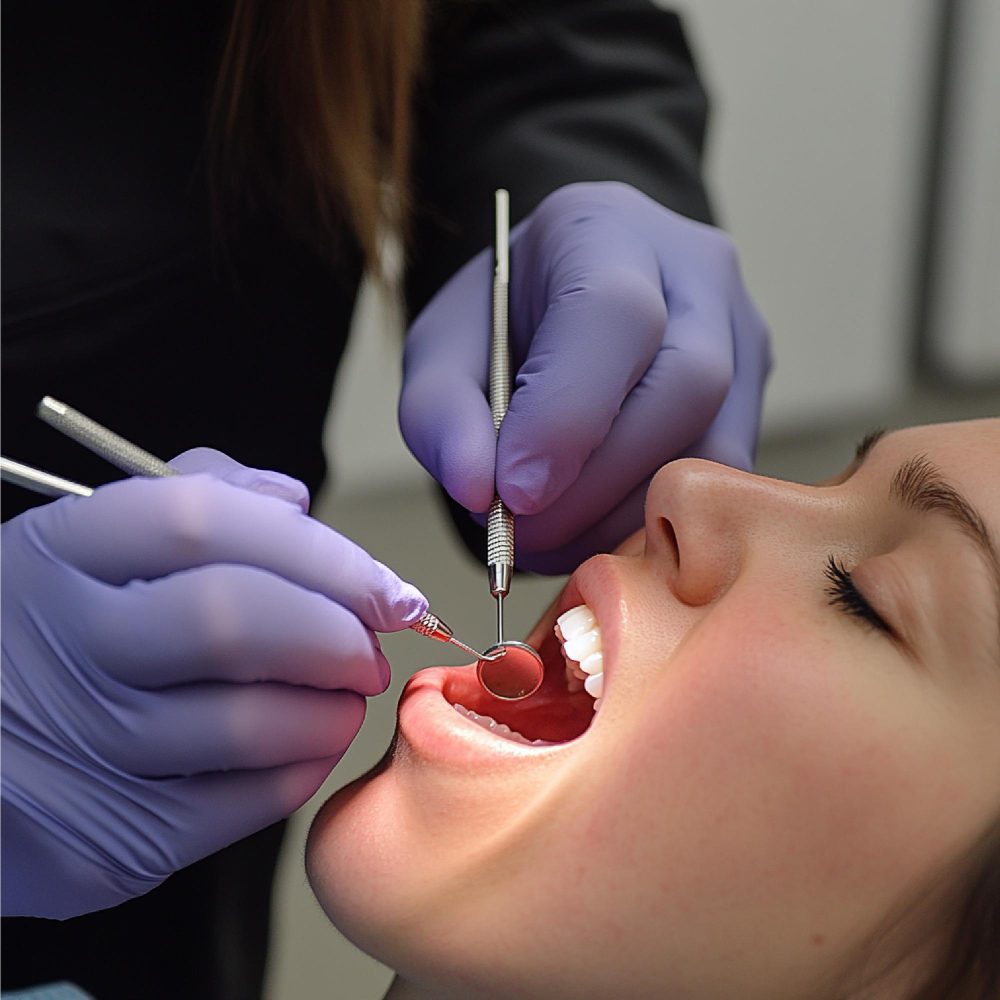
A periodontal maintenance visit combines an update of your health history, a full gum examination with probing, professional cleaning above and below the gumline, X-rays when needed and a review of your home care.
The AAP parameter lists these elements. A typical visit at our clinic in Taksim follows these steps:
- Medical and dental history update. New medicines, diabetes control, pregnancy and smoking status are noted.
- Gum charting and probing. Pocket depths and bleeding on probing are measured and compared with earlier records.
- Plaque and tartar assessment.
- Implant check, if you have implants. The tissues around each implant, the crown or bridge and the bite are examined.
- X-rays when needed. Images are taken when the clinician judges them necessary, for example to check bone levels.
- Scaling and root debridement. Deposits are removed above and below the gumline, using hand and ultrasonic instruments.
- Polishing. Stain and remaining plaque are polished away.
- Home-care review and next interval. Brushing and interdental cleaning are reviewed, and the date of your next visit is set.
If an area has worsened, the dentist may suggest returning to active treatment for that site rather than routine maintenance. The AAP parameter allows for this.
Want to know when your next maintenance visit should be?
Send us your last gum chart or a summary from your dentist. Our team can review it and plan your visit in Istanbul.
Ask on WhatsAppWhy does periodontal maintenance matter?
Periodontal maintenance matters because gum disease can return after treatment, and untreated periodontitis can lead to bone loss and tooth loss.
Cleveland Clinic states that periodontitis is the main cause of tooth loss in adults, and that untreated disease can also lead to bone loss and a misaligned bite. The aim of maintenance is to detect any change early, while it is still easier to manage, instead of waiting until a tooth becomes loose.
For patients with deeper pockets, partner clinic articles on deep gum pocket treatment and on the risks of delaying gum disease treatment explain what can happen when pockets are left untreated.
Periodontal maintenance and dental implants
Implants do not get tooth decay, but the gum and bone around them can become inflamed. Peri-implant mucositis affects the soft tissue; peri-implantitis also involves the supporting bone.
The EFP guideline on peri-implant diseases (2023) states that prevention should start when implants are planned and that a structured supportive peri-implant care programme with regular checks should follow once implants are in function. For patients planning dental implants in Istanbul, gum health is checked before placement and maintenance continues afterwards. Our partner clinic also explains peri-implantitis treatment in Turkey.
How do smoking and diabetes affect gum disease treatment in Istanbul?
Smoking and diabetes are two of the most important risk factors for periodontitis, so patients who smoke or have diabetes often need closer gum follow-up after treatment.
Smoking. Cleveland Clinic lists smoking and vaping as risk factors for periodontitis, and the NHS advises people with gum disease to stop smoking. SDCEP guidance includes reducing risk factors such as smoking as part of treatment.
Diabetes. The AAP notes that people with diabetes are two to four times more likely to develop periodontal disease, and that periodontal treatment has been shown to improve blood sugar levels in people with diabetes. It recommends a yearly comprehensive periodontal evaluation for people with diabetes, twice-daily brushing and daily cleaning between teeth. The partner clinic's guide on dental care for diabetic patients has more practical tips.
Warning signs: when to book a visit before your next maintenance date
Do not wait for your next scheduled visit if you notice changes in your gums. Contact your dentist if you have:
- gums that bleed again when you brush or floss;
- red, swollen or tender gums;
- a tooth that feels loose or has moved;
- pus, a bad taste or a gum swelling (possible abscess);
- bleeding, swelling or discomfort around an implant;
- gums that look as if they are pulling back from the teeth.
Facial swelling with fever, or swelling that affects breathing or swallowing, needs urgent medical care.
What home care keeps your gums stable between visits?
Daily home care is the part of periodontal maintenance you control: brush twice a day with fluoride toothpaste, clean between your teeth every day and do not smoke.
The NHS advises brushing at least twice a day with fluoride toothpaste, spitting rather than rinsing after brushing, cleaning between the teeth every day with floss or interdental brushes, and not using mouthwash straight after brushing. In practice:
- Interdental brushes come in different sizes; ask us which ones fit the spaces between your teeth.
- Clean along the gumline with a soft brush, angled towards the gum.
- Clean around implants and bridges with the aids your dentist shows you.
- Mouthwash is an extra, not a replacement for brushing and interdental cleaning.
The partner clinic's guide on how to clean your gums at home shows these steps in more detail.
Periodontal treatment in Istanbul as an international patient: keeping maintenance going at home
If you have periodontal treatment in Istanbul and then fly home, the key is to arrange maintenance with a local dentist or periodontist before you leave, and to take your records with you.
Durations and intervals are indicative; your dentist decides them after examination. If you combine gum treatment with other work, such as an implant-supported prosthesis in Istanbul, the plan usually starts with stabilising the gums.
Watch: careful treatment planning
Careful treatment planning | Dr. Abdurrahman Öztürk
In this short reel, Dr. Abdurrahman Öztürk explains why every treatment starts with careful planning. For gum patients, that means measuring the gums, reviewing X-rays and agreeing a maintenance schedule before any further work. You can see completed cases on our before and after results page.
Why choose Taksim Clinics for periodontal maintenance in Istanbul?
Taksim Clinics is a dental clinic in central Beyoğlu, easy to reach from Taksim Square, with an English-speaking team that treats both local and international gum patients.
Our periodontics in Istanbul service covers diagnosis, deep cleaning, gum surgery and long-term maintenance. We explain your measurements and set an interval based on your risk. To see how AI-supported analysis can help track gum health, visit our sister clinic's page on AI gum disease treatment in Istanbul.
Medically reviewed by: Dr. Abdurrahman Öztürk
Dentist and medical lead of Taksim Clinics. This article was medically reviewed by Dr. Abdurrahman Öztürk based on the clinic's gum care protocols and the sources below. Meet your dentist.
Clinic location: Gümüşsuyu Mah., Mete Cad., Beyoğlu, Istanbul
Directions are also on our contact page.
Key takeaways
- Periodontal maintenance is ongoing care for people already treated for gum disease, not a routine cleaning.
- Many patients are seen every 3 months, but the interval is individual (3 to 12 months in SDCEP guidance).
- Each visit includes probing, cleaning above and below the gumline, X-rays when needed and a home-care review.
- Implants need supportive care too, to help prevent peri-implant disease.
- Smoking and diabetes raise risk and often mean closer follow-up.
- International patients should leave Istanbul with a written summary and a local maintenance plan.
More dental guides from Taksim Clinics
Gum recession: causes and treatment Dental treatment in Turkey, step by step All-on-X dental implants in Istanbul Tooth sensitivity to cold and hot Treatment for oral thrush Treatment for tooth pain at night Dental trauma treatment in Istanbul Wisdom tooth removal in IstanbulPlan your periodontal maintenance in Istanbul
Message us on WhatsApp with your treatment history. Your maintenance interval is set only after an examination.
WhatsApp: +90 534 445 94 44 Call +90 534 445 94 44 Taksim Clinics home pagePeriodontal maintenance in Istanbul: frequently asked questions
What is the difference between periodontal maintenance and a regular cleaning?
A regular cleaning is preventive care for healthy gums. Periodontal maintenance is for people already treated for periodontitis and adds full gum probing, cleaning below the gumline and closer monitoring of pockets.
How often is periodontal maintenance needed?
The AAP notes 3-month intervals are effective for most patients with a history of periodontitis. SDCEP guidance gives a range of 3 to 12 months, set by your dentist according to your gum status and risk.
Is periodontal maintenance painful?
Most people find it similar to a thorough cleaning. Sensitive areas can be numbed if needed.
Do I need periodontal maintenance for life?
Periodontitis is a chronic condition, and the AAP says most treated patients need ongoing maintenance. The interval may change over time, but regular gum monitoring usually continues long term.
Do dental implants need periodontal maintenance?
Yes. The EFP recommends a structured supportive peri-implant care programme once implants are in function, with regular checks of the tissues around them.
Can I have gum treatment in Istanbul and maintenance at home?
Yes. Ask for a written summary of your diagnosis, treatment and pocket measurements, then book maintenance with a local dentist or periodontist and keep the suggested interval.
Does smoking affect periodontal maintenance?
Smoking is a risk factor for periodontitis, and the NHS advises people with gum disease to stop. Smokers may be advised to attend more often.
How do I book periodontal maintenance at Taksim Clinics?
Message us on WhatsApp at +90 534 445 94 44 with your treatment history. The clinic is in Gümüşsuyu, Beyoğlu, a short walk from Taksim Square.
Conclusion: periodontal maintenance in Istanbul protects your treatment
Periodontal maintenance in Istanbul is what keeps gum disease treatment working: regular gum measurements, cleaning below the gumline, X-rays when needed and honest feedback on home care, at an interval set for your own risk, often around every 3 months. The Taksim Clinics team in Beyoğlu will help you plan it.
Sources
- American Academy of Periodontology. Parameter on Periodontal Maintenance. Journal of Periodontology. 2000;71(5 Suppl):849-850. J Periodontol (PDF)
- American Academy of Periodontology — Non-Surgical Treatments. perio.org
- American Academy of Periodontology — Gum Health and Diabetes. perio.org
- Scottish Dental Clinical Effectiveness Programme — Prevention and Treatment of Periodontal Diseases: stepwise approach. sdcep.org.uk
- EFP workshop participants. Prevention and treatment of peri-implant diseases — The EFP S3 level clinical practice guideline. Journal of Clinical Periodontology. 2023;50(S26):4-76. cris.huji.ac.il
- NHS — Gum disease. nhs.uk
- Cleveland Clinic — Periodontitis. my.clevelandclinic.org
- Cleveland Clinic — Scaling and Root Planing. my.clevelandclinic.org