


Gum Recession: Causes, Signs, Stages and Treatment Options
Have your teeth started to look longer, or does a cold drink make one tooth sting near the gum line? These are often the first clues of gum recession, a common condition in which the gum pulls back and exposes the root. It usually develops slowly and painlessly, so many people notice it late.
The good news is that receding gums can be managed: the cause can be controlled, further recession can often be stopped, and in suitable cases exposed roots can be covered again.
In this guide, the dental team at Taksim Clinics in Istanbul explains why gums recede, how to recognise the warning signs, how recession progresses, which treatments are available, and what you can do every day to protect your gums.
Quick Answer: What Is Gum Recession and Can It Be Treated?
Gum recession is when the gum tissue pulls away from the teeth and exposes the roots, often because of gum disease, brushing too hard, tartar build-up, smoking or naturally thin gums; receded gums do not grow back on their own, but treatment can stop the cause, reduce sensitivity and, in suitable cases, cover exposed roots with a gum graft.
Treatment starts with removing the cause, such as deep cleaning for gum disease, gentler brushing and quitting tobacco. Mild cases may only need monitoring, while advanced recession may need surgery. The right option is chosen after an examination.
Important Medical Note
This article is for general education and does not replace a dental examination. Gum recession has many possible causes, and the right treatment depends on your gums, bone level, bite and general health. Only a dentist or periodontist can assess your case. No treatment result can be guaranteed for every patient.
What Is Gum Recession?
Gum recession is the gradual loss of gum tissue around a tooth, so the gum margin moves down (or up, on the upper jaw) and part of the root becomes visible. Cleveland Clinic describes it simply as gum tissue pulling away from the teeth and exposing the roots underneath.
Unlike the enamel-covered crown, the root has a softer surface, so exposed roots can feel sensitive, wear more easily and decay. Recession is also very common with age: according to Cleveland Clinic, about 88% of people over 65 have gum recession on at least one tooth.
Recession is closely linked to gum health in general, so see our partner guide on gingivitis, its causes and treatments.
What Causes Gums to Recede?
Gum recession is usually caused by a combination of factors, the most common being gum (periodontal) disease, brushing too hard, tartar build-up, tobacco use and naturally thin gum tissue. Cleveland Clinic lists the following main causes:
Gum (Periodontal) Disease
Bacterial infection destroys the gum tissue and the bone that supports the teeth. The NIDCR lists receding gums that make teeth look longer among the signs of gum disease.
Aggressive Brushing
Scrubbing hard, especially with a hard-bristled brush and a horizontal sawing motion, can wear the gum margin away over the years.
Plaque and Tartar
Plaque that is not removed hardens into tartar, which irritates the gums. Only a dental professional can remove tartar.
Smoking and Tobacco
The NIDCR names smoking as one of the most significant risk factors for gum disease; it also slows healing and can make treatment less successful.
Thin Gums and Genetics
Some people are born with thin, delicate gum tissue, which recedes more easily even with good care.
Tooth Position, Trauma and Piercings
Misaligned teeth, injury to the gums, and lip or tongue piercings that rub against the gum can all contribute to recession.
Other factors raise the risk indirectly through gum disease. Mayo Clinic mentions hormonal changes such as pregnancy or menopause, diabetes, poor nutrition including low vitamin C, and medicines that cause dry mouth.
What Are the Signs and Symptoms of Receding Gums?
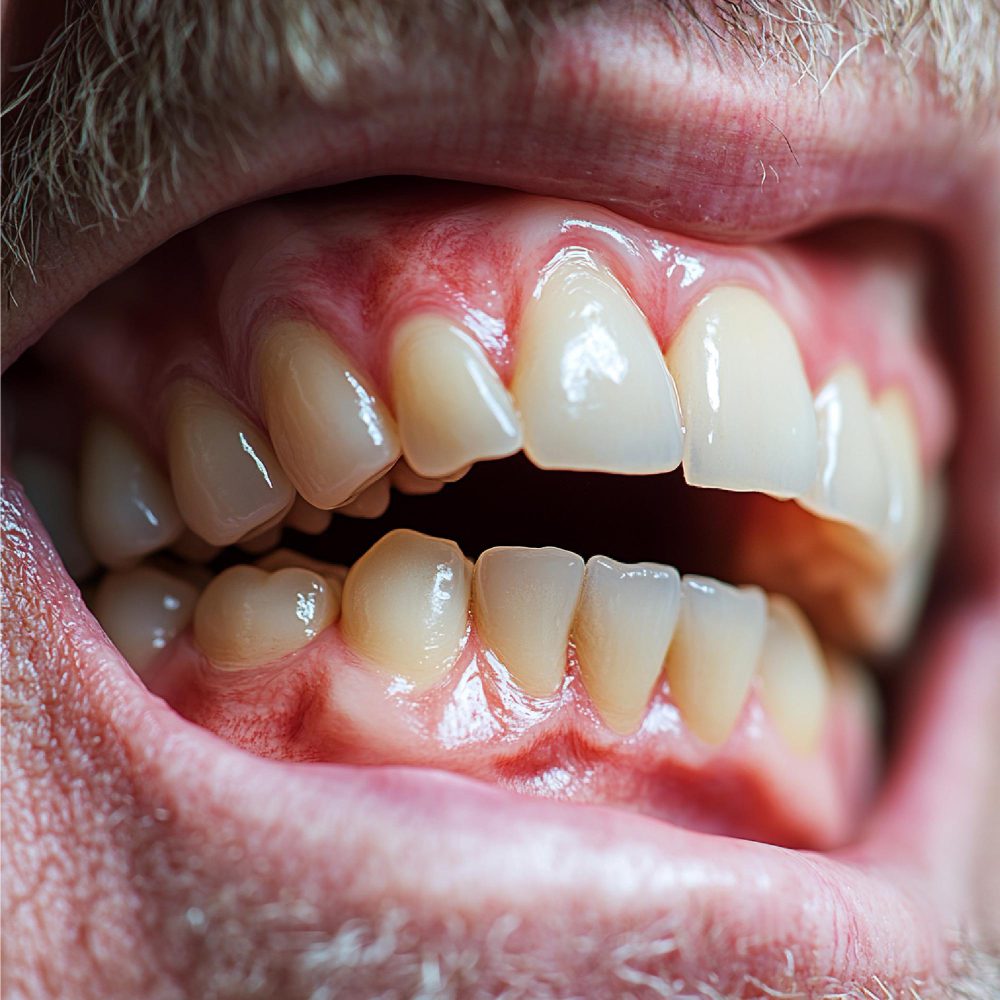
The most typical signs of gum recession are teeth that look longer than before, visible roots near the gum line, and sensitivity to cold, heat or sweet foods. Because the process is slow, many people do not notice it until a dentist points it out.
- Teeth looking longer: Mayo Clinic describes gums that pull away from the teeth, making the teeth look longer than usual.
- Visible tooth roots: a yellowish or slightly darker band near the gum line, where the root surface is exposed.
- Sensitivity: Cleveland Clinic lists sensitivity to heat, cold and sweets, as well as during brushing, flossing and dental cleanings.
- A notch or step near the gum line that you can feel with a fingernail.
- Dark triangular gaps between the teeth, which Mayo Clinic also mentions among signs of periodontitis.
- Discomfort near the gum line or gums that bleed, swell or feel tender if gum disease is also present.
If sensitivity sounds familiar, our partner article on tooth sensitivity treatment in Istanbul explains the options for calming sensitive teeth.
What Are the Stages of Gum Recession?
Gum recession usually progresses gradually from a slight, barely visible change to significant root exposure, and the earlier it is caught, the simpler it usually is to manage. Dentists measure recession in millimetres and use clinical classification systems that also consider the bone and gum between the teeth. The simplified timeline below shows how it often develops:
The gum margin has moved slightly, often on one or two teeth. There may be no symptoms, or only occasional sensitivity. This is the ideal moment to correct brushing habits and treat any gum inflammation.
A visible part of the root is exposed and the tooth looks longer. Sensitivity becomes more frequent, and a notch may form at the gum line. Plaque collects more easily on the exposed root.
A larger area of root is exposed, sometimes with loss of gum and bone between the teeth and dark triangular gaps. The risk of root decay and sensitivity increases, and the appearance of the smile changes.
When recession is caused by advanced gum disease, the bone around the tooth may be badly affected. The NIDCR lists loose teeth among the signs of gum disease, and the NHS notes that untreated gum disease can lead to teeth becoming loose or falling out.
Not everyone passes through every stage; recession caused by hard brushing can stay stable for years once the habit is corrected. Regular check-ups show whether it is stable or progressing.
Can Gums Grow Back?
No. Receded gum tissue does not grow back on its own, as Cleveland Clinic clearly states, but gum recession is still treatable: the cause can be controlled to prevent further loss, and exposed roots can often be covered again surgically.
Products that promise to "regrow gums" cannot rebuild lost tissue. Good home care keeps the remaining gums healthy and prevents further loss; where gum must be rebuilt, a periodontist does it with procedures such as a gum graft.
So the realistic goals of treatment are to:
- Stop the cause, such as gum disease or aggressive brushing.
- Reduce sensitivity and protect the exposed root from decay and wear.
- Cover the exposed root where appropriate, for health or aesthetic reasons.
- Maintain the result with good daily care and regular check-ups.
How Is Gum Recession Treated?
Gum recession is treated according to its cause and severity, ranging from deep cleaning and desensitising care for mild cases to gum graft surgery for more advanced root exposure. Cleveland Clinic describes both non-surgical and surgical options, and the table below summarises them:
| Treatment | What it involves | Usually considered when |
|---|---|---|
| Deep cleaning (scaling and root planing) | Removing plaque and tartar above and below the gum line and smoothing the roots | Gum disease or deep pockets are present |
| Topical antibiotics or medicated rinses | Medication placed in pockets or used as a rinse to help control bacteria | As a support to deep cleaning in some cases |
| Desensitising care | Fluoride varnish and desensitising toothpaste | Mild recession with sensitivity |
| Dental bonding | Tooth-coloured resin applied over the exposed root area | To cover sensitive or notched root surfaces |
| Orthodontics | Moving teeth into a better position | Misaligned teeth contribute to the recession |
| Gum graft surgery | Placing gum tissue over the exposed root, usually from the palate or a donor source | Moderate to advanced recession, sensitivity or aesthetic concerns |
| Pinhole surgical technique | A minimally invasive method that repositions the existing gum through a small opening | Selected cases, after specialist assessment |
Deep Cleaning: Scaling and Root Planing
If gum disease is behind the recession, treating the infection comes first. The American Dental Association's MouthHealthy explains that scaling and root planing is a deep cleaning below the gum line: scaling removes plaque and tartar down to the bottom of each pocket, and root planing smooths the roots so the gums can reattach to the teeth. It may be done over more than one visit, with local anaesthetic if needed.
According to MouthHealthy, soreness for a day or two and sensitivity for up to a week are common afterwards. Deep cleaning does not regrow gum, but it stops the main driver of recession in many patients. For a fuller picture of how gum disease is managed, see this guide to gum diseases and their treatment options in Istanbul.
Gum Graft Surgery
A gum graft covers the exposed root with new gum tissue and is described by Cleveland Clinic as the most predictable long-term option for receding gums. The American Academy of Periodontology (AAP) explains that the periodontist takes gum tissue from the palate (the roof of the mouth) or another donor source and places it over the exposed root, which can help prevent further recession and bone loss, reduce sensitivity and improve the appearance of the smile.
According to Cleveland Clinic, a single graft usually takes about an hour, most people return to work within one to two days, and full recovery typically takes about one to two weeks, sometimes longer when several areas are treated. Swelling for a few days is common, and strenuous exercise is usually avoided in the first week. Complications are uncommon, but can include infection, bleeding or graft failure, which is why careful planning and aftercare matter.
The Pinhole Technique
The pinhole surgical technique is a newer, minimally invasive approach in which the existing gum is loosened through a small opening and moved over the exposed root, without taking tissue from the palate. It is not suitable for every case: thin gums, bone loss between the teeth or active gum disease may make a traditional graft the better choice. The periodontist decides after examination.
Modern digital diagnostics can help with this assessment. Our sister clinic explains how technology supports gum diagnosis in its guide to AI-assisted gum treatment in Istanbul.
Which Treatment Is Right for Me?
The right gum recession treatment depends mainly on how much root is exposed, whether gum disease is active, how thick your gums are, and how much the problem bothers you. The table below is only a starting point; the final plan is made after examination and X-rays.
| Your situation | Approach often considered | Note |
|---|---|---|
| Slight recession, no symptoms | Monitoring, gentle brushing technique | Measurements at each check-up |
| Recession with bleeding or swollen gums | Deep cleaning and gum disease treatment first | Surgery is not done on inflamed gums |
| Sensitive exposed roots | Desensitising toothpaste, fluoride varnish, possibly bonding | A graft may also reduce sensitivity |
| Visible, progressing recession on one or a few teeth | Gum graft or, in selected cases, pinhole technique | Depends on gum thickness and bone |
| Recession linked to crooked teeth | Orthodontic assessment, sometimes combined with grafting | Order of treatment planned by the team |
| Recession with very loose teeth | Periodontal treatment; extraction and replacement if a tooth cannot be saved | Every effort is made to keep natural teeth |
On front teeth, gums are assessed before any smile design, because veneers or crowns placed on unstable gums may later show exposed margins. Our comparison of veneers vs zirconia crowns explains how restorations relate to the gum line.
Is It Dangerous to Leave Receding Gums Untreated?
Untreated gum recession is not an emergency, but it can gradually lead to more sensitivity, root decay, wear of the root surface and, when caused by gum disease, loosening and even loss of teeth. The NHS notes that untreated gum disease can lead to shrinking gums, loose teeth and dental abscesses.
The NIDCR adds that early gum disease caused by plaque can often be reversed with daily brushing and flossing, so the earlier you act, the better. If a tooth has been lost to gum disease, see our guide to dental implants in Istanbul at Taksim Clinic.
Warning Signs: When to See a Dentist Promptly
- A tooth that feels loose or has started to move.
- Pus between the teeth and gums, or a swelling on the gum.
- Gums that bleed regularly when brushing or flossing.
- Recession that is visibly getting worse over weeks or months.
- Sharp pain when biting, or sensitivity that does not settle.
- Persistent bad breath or a bad taste in the mouth.
How Can I Stop Receding Gums From Getting Worse?
You can help prevent gum recession, or stop it from progressing, by brushing gently with a soft brush, cleaning between your teeth every day, avoiding tobacco and attending regular dental check-ups and cleanings. The NIDCR, NHS and Mayo Clinic all give similar advice:
- Brush twice a day with fluoride toothpaste using a soft-bristled brush. Mayo Clinic recommends brushing for two minutes at least twice a day.
- Use gentle pressure and small angled strokes instead of hard horizontal scrubbing.
- Clean between your teeth daily with floss or interdental brushes, as recommended by the NHS and NIDCR.
- Spit, don't rinse after brushing, so the fluoride stays on the teeth, as the NHS advises.
- Stop smoking and avoid all tobacco. The NIDCR notes that quitting can improve treatment results.
- Have regular check-ups and professional cleanings, typically every 6 to 12 months according to Mayo Clinic, or more often if you are at higher risk.
- Protect your teeth from grinding with a night guard if your dentist recommends one.
Cleveland Clinic points out that recession cannot always be prevented, especially in people with a genetic tendency to thin gums, but these habits greatly reduce the risk of it getting worse.
Gum Recession Treatment in Istanbul at Taksim Clinics
At Taksim Clinics, gum recession is approached as a health problem first and a cosmetic concern second. The first visit includes a gum examination, recession measurements and X-rays, after which we explain the cause and the sensible options, including when monitoring is enough.
A plan often starts with cleaning or deep cleaning and brushing coaching; grafting, if appropriate, is planned once the gums are free from inflammation. For international patients, we review photos and X-rays in advance to estimate visits and healing time, but the final plan is confirmed after an in-person examination.
Key Takeaways
- Gum recession means the gums pull back and expose the tooth roots.
- Common causes are gum disease, hard brushing, tartar, tobacco and thin gums.
- Signs include longer-looking teeth, visible roots and sensitivity.
- Receded gums do not grow back on their own, but recession is treatable.
- Treatment ranges from deep cleaning and desensitising care to gum grafts.
- Gentle brushing, daily interdental cleaning, no tobacco and regular check-ups help prevent progression.
Recommended Articles on Gum Health and Dental Care
Bleeding Gums: Causes, Treatments and When to Worry The Best Treatment for Tooth Pain at Night Is Root Canal Treatment Painful? No-Prep Veneers Without Shaving Teeth Choosing a Hollywood Smile Clinic in Turkey Teeth Whitening in Turkey: What to Know How to Choose a Dental Implant Clinic in TurkeyWorried About Receding Gums?
Send us clear photos of your gums and any recent X-rays, and the Taksim Clinics team will help you understand what may be causing the recession and how a visit to Istanbul could be planned. Final treatment is decided after an in-person examination.
Chat on WhatsApp: +90 534 445 94 44 Visit Taksim ClinicsFrequently Asked Questions About Gum Recession
Can receding gums grow back naturally?
No. Gum tissue that has receded does not grow back on its own, and home remedies cannot rebuild it. Treatment can stop further recession, and a gum graft can cover exposed roots in suitable cases.
What is the most common cause of gum recession?
Gum disease is one of the most common causes, along with brushing too hard, tartar build-up, smoking and naturally thin gums. Often several factors work together.
Can brushing too hard really cause receding gums?
Yes. Cleveland Clinic lists brushing too hard or aggressively among the causes. Using a soft brush and gentle, angled strokes helps protect the gum margin.
Is gum recession reversible with deep cleaning?
Deep cleaning does not regrow gum tissue, but it removes plaque and tartar below the gum line and helps the gums reattach to the roots, which can stop recession caused by gum disease from progressing.
Does a gum graft hurt?
The procedure is done under local anaesthetic. Afterwards, discomfort and swelling for a few days are common. Cleveland Clinic notes that most people return to work within one to two days and recover in about one to two weeks.
What is the difference between a gum graft and the pinhole technique?
A gum graft adds tissue, usually from the palate or a donor source, over the exposed root. The pinhole technique repositions the existing gum through a small opening. Which one suits you depends on your gum thickness and bone.
Why are my teeth sensitive near the gum line?
When gums recede, the root surface is exposed and can react to cold, heat, sweets or brushing. Desensitising toothpaste, fluoride varnish, bonding or a graft may help, depending on the cause.
Can I get veneers or implants if I have gum recession?
Often yes, but gum problems are usually treated first so that later treatment has a healthy, stable foundation. The dentist decides the order of treatment after examination.
How long do I need to stay in Istanbul for gum recession treatment?
It depends on what is needed. Cleaning may take one or two visits, while grafting needs healing time and a follow-up. The team suggests a schedule after reviewing your photos and X-rays, and confirms it after examination.
How can I stop my gums from receding further?
Brush gently twice a day with a soft brush and fluoride toothpaste, clean between your teeth daily, avoid tobacco, treat grinding if present, and attend regular check-ups and cleanings.
Conclusion: Gum Recession Is Common, but You Can Act Early
Gum recession is very common, especially with age, and it often develops quietly. While receded gums do not grow back by themselves, the condition is treatable: identifying and controlling the cause, treating gum disease, protecting sensitive roots and, when needed, covering exposed roots with a graft can protect your teeth for the long term. The earlier recession is noticed, the simpler the treatment usually is.
If your teeth look longer than before or feel sensitive at the gum line, a calm, thorough examination is the best first step. The Taksim Clinics team in Istanbul will be happy to assess your gums and explain your options.
Scientific Sources
- Cleveland Clinic — Gum Recession: Causes, Prevention, Surgery & Treatment. my.clevelandclinic.org
- Cleveland Clinic — Gum Graft Surgery: What It Is, Procedure & Recovery. my.clevelandclinic.org
- American Academy of Periodontology (AAP) — Surgical Procedures: Gum Graft Surgery. perio.org
- National Institute of Dental and Craniofacial Research (NIDCR, NIH) — Periodontal (Gum) Disease. nidcr.nih.gov
- NHS — Gum disease. nhs.uk
- Mayo Clinic — Periodontitis: Symptoms and causes. mayoclinic.org
- American Dental Association, MouthHealthy — Scaling and Root Planing for Gum Disease. mouthhealthy.org