

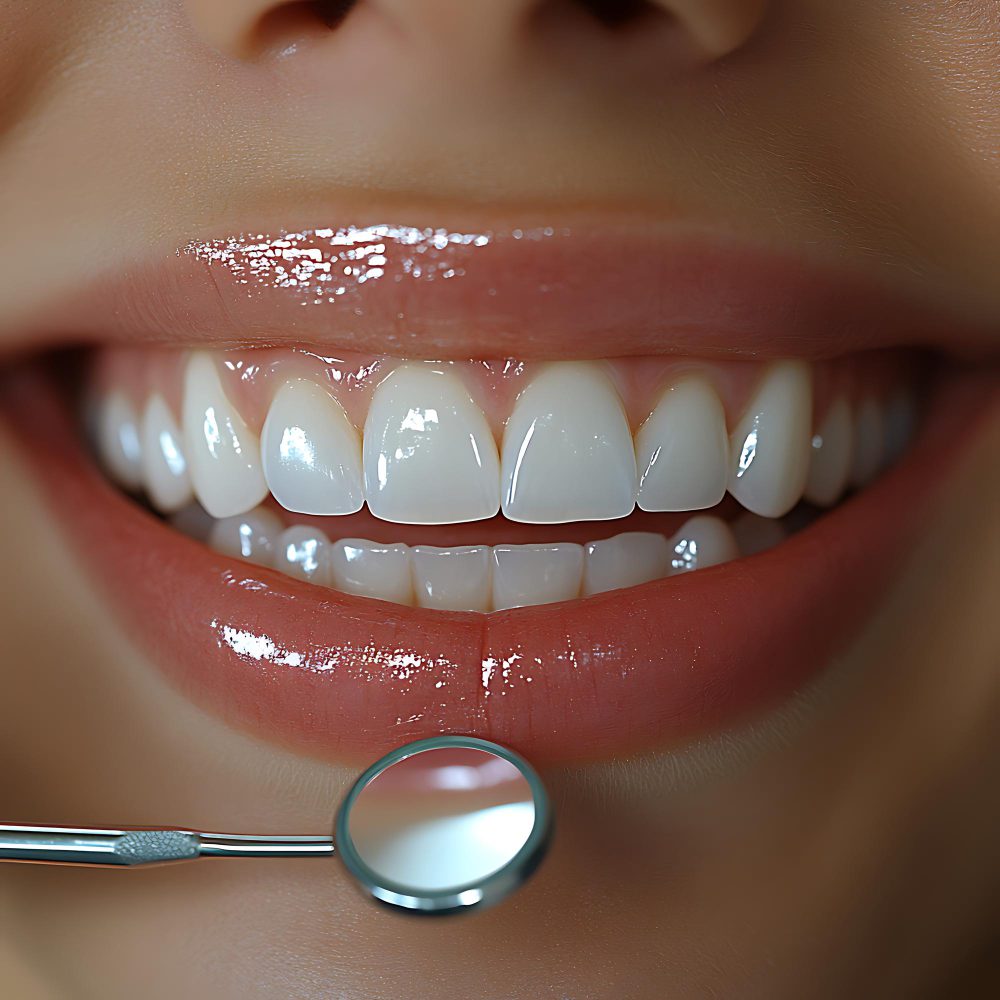
Zirconia Veneers in Istanbul: What They Really Are, When Zirconia Fits, and How They Compare with E.max and Composite
Zirconia veneers are one of the most searched cosmetic options, and also one of the most misunderstood. Some people mean thin zirconia shells bonded to the front of the teeth; many others actually mean full zirconia crowns. At our clinic in Beyoğlu, a short walk from Taksim Square in Istanbul, we explain the difference before any tooth is touched.
This guide from Taksim Clinics covers zirconia veneers (often called zirconium veneers): when zirconia fits, preparation, looks, lifespan data, steps in Istanbul and aftercare.
Last updated: 12 November 2026
Quick answer: what are zirconia veneers?
Zirconia veneers are thin, tooth-coloured shells made of zirconia ceramic and bonded to the front of the teeth, but in everyday use the term often describes zirconia crowns, which cover the whole tooth; for thin cosmetic laminate veneers, porcelain or lithium disilicate (E.max) remains the more usual choice.
Zirconia is stronger and more opaque, so it is mainly considered for very dark teeth, heavy bites and back teeth.
Not sure whether you need veneers or crowns?
Send us clear photos of your smile on WhatsApp and we will explain which options may suit your teeth.
WhatsApp us: +90 534 445 94 44Important medical note
This article is general information and does not replace a dental examination. Whether you need veneers, crowns or a different treatment, and which material suits you, can only be decided after a clinical exam, X-rays where needed and a look at your bite. Results vary from person to person.
What does "zirconia veneers" mean in practice?
In practice, "zirconia veneers" can mean two different treatments: thin zirconia laminate shells on the front of the teeth, or zirconia crowns that cover the whole tooth and are marketed as "zirconium veneers".
A veneer is a custom-made shell that fits over the front surface of a tooth. Cleveland Clinic describes veneers as mainly cosmetic, made from tooth-coloured composite or porcelain. The ADA's MouthHealthy site also names porcelain and composite as the two main types. Neither source lists zirconia as a standard veneer material.
Zirconia (zirconium dioxide) is far better known as a crown material; Cleveland Clinic calls it one of the most popular materials for ceramic crowns. A crown covers the whole visible tooth, so more tooth is usually reshaped than for a veneer.
Thin zirconia laminate veneers do exist. A 2025 randomized trial by Nguyen and colleagues compared them with lithium disilicate veneers, but the authors note that long-term clinical evidence is still limited. So when you hear "zirconia veneers", ask whether the plan is a veneer or a crown.
If you are mainly deciding between these two treatments, our separate guide on veneers vs zirconia crowns covers that choice in detail.
Zirconia veneers vs E.max vs composite: how do they compare?
Zirconia, E.max (lithium disilicate) and composite differ mainly in strength, translucency, how they bond to the tooth and how much research supports them as veneers.
| Point | Zirconia veneers | E.max / porcelain veneers | Composite veneers |
|---|---|---|---|
| Material type | Polycrystalline ceramic (zirconium dioxide) | Glass ceramic (lithium disilicate) or feldspathic porcelain | Tooth-coloured resin |
| Translucency | More opaque; newer translucent types trade some strength for light transmission | Good light transmission thanks to the glass content | Shade built up by the dentist; can discolour at the edges over time |
| Masking dark teeth | Opacity can help hide a discoloured tooth | Dark teeth are harder to mask | Limited, depends on layering |
| Bonding | Cannot be etched with hydrofluoric acid; needs special adhesive protocols | Etched with hydrofluoric acid for a strong bond | Bonded directly to the tooth |
| Visits | Lab-made, usually two visits | Lab-made, usually two visits | Can be made directly in the chair |
| Evidence on survival | One-year trial: success similar to lithium disilicate; long-term data limited | Systematic review: 10-year estimated survival 95.5% | Meta-analysis: pooled survival 88% over 2 to 8 years |
| Most common problems | Debonding reported; long-term failure modes not yet known | Fracture, then debonding | Surface roughness, colour mismatch, marginal discoloration |
The table summarises Nguyen and colleagues (2025) for zirconia and lithium disilicate, the Alenezi systematic review (2021) for porcelain laminate veneers and the Lim meta-analysis (2023) for composite. Study designs differ, so this is not a head-to-head ranking. For more on resin versus ceramic, see the partner clinic's article on composite vs porcelain veneers.
When is zirconia chosen instead of porcelain or E.max?
Zirconia is usually chosen when strength or masking matters more than maximum translucency: very dark or discoloured teeth, heavy biting forces and back teeth.
Dark or discoloured teeth
Nguyen and colleagues note that dark teeth are difficult to mask with glass ceramics, while zirconia's opacity can hide discoloured tooth structure.
Heavy bite or grinding
Cleveland Clinic says zirconia crowns withstand heavier forces than other ceramic crowns.
Back teeth
Molars carry the highest chewing load, so full zirconia crowns are common there.
A tooth darkened after root canal treatment is a typical case; our root canal therapy team in Istanbul first checks that the tooth is healthy. Our sister site's article on zirconia vs E.max crowns explains the same material choice for crowns and bridges.
For normal-coloured front teeth with a healthy bite, porcelain or E.max veneers are usually the more natural-looking choice.
How much tooth is removed for zirconia veneers?
For zirconia veneers, a thin layer of enamel is removed from the front of the tooth, similar to ceramic veneers, while zirconia crowns need the tooth to be reshaped on all sides.
In the Nguyen trial, preparation for both zirconia and lithium disilicate veneers was about 0.5 to 0.7 mm on the front surface and 1.0 to 1.5 mm at the biting edge. For dark teeth, the authors prepared more to leave space for masking,
Cleveland Clinic notes that you lose at least some enamel with veneers, that most types are irreversible and that teeth can become more sensitive to heat and cold.
If you want to keep reduction to a minimum, ask whether a minimal-prep or no-prep option is possible. We explain when that works in our article on no-prep veneers without shaving teeth.
Want to know how much preparation your teeth would need?
Send photos or an X-ray and we will explain the options, from minimal-prep veneers to crowns.
Ask on WhatsAppDo zirconia veneers look natural? Translucency and aesthetics
Zirconia veneers can look natural, but zirconia is naturally more opaque than glass ceramics, so on healthy-coloured front teeth E.max or porcelain often reproduces the translucent edge of enamel more easily.
Natural enamel lets some light through. Cleveland Clinic notes that all-ceramic or porcelain crowns mimic tooth enamel more closely than any other crown type.
Newer "translucent" zirconia contains more yttria, which increases translucency. Nguyen and colleagues explain that this comes at the cost of lower flexural strength. A 2023 lab study by Mekled and colleagues on ultra-translucent zirconia laminate veneers found that both the veneer thickness and the colour of the tooth underneath significantly changed the final shade.
The tooth underneath shows through, so shade planning matters. The partner clinic's guide on how to choose veneers colour explains how shade is chosen, and digital smile design in Istanbul lets you preview shape and proportion before treatment.
How long do zirconia veneers last?
There is no reliable long-term lifespan figure for thin zirconia veneers yet; the published ranges are for porcelain veneers, composite veneers and crowns in general.
- Veneers in general: Cleveland Clinic says veneers last on average 10 to 15 years with proper care.
- Porcelain laminate veneers: the Alenezi review of 25 studies and 6,500 veneers estimated a 10-year cumulative survival of 95.5%, with fracture and debonding as the most common problems.
- Composite veneers: the Lim meta-analysis reported a pooled survival of 88% in trials with mean follow-up of about 2 to 8 years.
- Zirconia veneers: the Nguyen trial found success of 96.2% for zirconia and 96.0% for lithium disilicate after one year, and the authors say one year may not capture long-term failures.
- Crowns: Cleveland Clinic says crowns last between 5 and 15 years with proper care, and some last more than 30 years.
These are study averages, not a promise for any one patient.
Watch: natural-looking crowns and digital smile design
Natural-looking crowns and digital smile design | Dr. Abdurrahman Öztürk
In this short reel, Dr. Abdurrahman Öztürk shows how natural-looking crowns are planned with digital smile design; we use the same planning when comparing veneer materials. You can also see real cases on our before and after results page.
How are zirconia veneers done in Istanbul? Process and days
Zirconia veneers in Istanbul are usually done in two clinical stages, preparation with scans and then bonding, with the lab work in between; in our clinic's indicative plan the trip takes about 5 to 7 days.
- Examination. Decay, gums, old fillings and bite, with X-rays where needed.
- Smile planning. Shape, shade, veneer or crown, and material.
- Preparation and digital scan. The teeth are prepared under local anaesthetic and scanned. Cleveland Clinic notes that temporary veneers may be placed while the lab works.
- Laboratory stage. The veneers are designed and milled.
- Try-in and bonding. We check fit, shade and bite, then bond the veneers. Zirconia needs a specific bonding protocol because it cannot be etched with hydrofluoric acid.
- Final check. Bite and comfort before you fly home.
These durations are our clinic's indicative plan and change if extra treatment is needed. Cleveland Clinic notes that a lab typically needs two to three weeks to make a crown, so ask any clinic how its lab schedule fits your trip. Our step-by-step guide to dental treatment in Turkey covers travel planning, and the partner clinic's article on how many days zirconia crowns take in Turkey covers the crown timeline.
How do you care for zirconia veneers?
Zirconia veneers are cared for like natural teeth: gentle brushing twice a day, daily cleaning between the teeth, no biting on hard objects and regular check-ups.
- Brush at least twice a day with a non-abrasive fluoride toothpaste and a soft brush (Cleveland Clinic).
- Clean between your teeth every day; MouthHealthy reminds that cavities can still form under or around a veneer.
- Do not bite nails, pens or ice.
- If you grind or clench, ask about a mouth guard, as Cleveland Clinic advises for crowns.
- Keep regular dental check-ups and professional cleanings.
Warning signs: a veneer that feels loose or moves, a sharp or chipped edge, pain when biting, swollen or bleeding gums around a veneer, or sensitivity that keeps getting worse. Contact a dentist promptly; Cleveland Clinic notes that a veneer can come off.
Who is not a good candidate for zirconia veneers?
You may not be a good candidate for zirconia veneers if you have untreated decay or gum disease, heavy grinding, a deep overbite, very little enamel left, or teeth so damaged that a crown is the safer option.
- Active decay or gum disease: Cleveland Clinic says veneers suit people free of extensive cavities and gum disease; MouthHealthy says these must be treated first.
- Grinding, clenching or a deep overbite: MouthHealthy states that veneers may not be a good choice in these cases. The Nguyen trial excluded patients with bruxism.
- Heavily filled or broken teeth: a crown usually protects them better.
For broader context on veneer planning in Istanbul, see our pages on veneers in Turkey and veneers and zirconium crowns in Istanbul.
Why plan zirconia veneers at Taksim Clinics in Istanbul?
Taksim Clinics is a dental clinic in Beyoğlu, central Istanbul, a short walk from Taksim Square and close to many hotels.
Every cosmetic plan starts with an examination and an honest comparison of veneers, crowns and materials; we recommend zirconia only where it has a clear reason, and stay in touch on WhatsApp after you fly home. To see how AI tools support crown and veneer planning, visit our sister clinic's page on AI-planned zirconia and E.max crowns in Istanbul.
Medically reviewed by: Dr. Abdurrahman Öztürk
Dentist and medical lead of Taksim Clinics. This article was medically reviewed by Dr. Abdurrahman Öztürk based on the clinic's cosmetic treatment planning and the sources listed below. Meet your dentist.
Clinic location: Gümüşsuyu Mah., Mete Cad., Beyoğlu, Istanbul
Key takeaways
- "Zirconia veneers" can mean thin zirconia shells or full zirconia crowns; always ask which one is planned.
- For thin front-tooth veneers, porcelain or E.max is still the more usual material.
- Zirconia is mainly chosen for very dark teeth, heavy bites and back teeth.
- Long-term data for zirconia veneers are limited; published lifespan ranges come from porcelain, composite and crown studies.
More cosmetic dentistry guides from Taksim Clinics
Dental crowns in Istanbul Hollywood smile in Istanbul Dental aesthetics in Istanbul Teeth whitening in Istanbul Fixed prosthodontics in Istanbul Smile and gum contouring in Istanbul TMJ disorder and jaw clenching treatment in IstanbulBook your zirconia veneers consultation
Send us photos or X-rays on WhatsApp. Your plan and material are confirmed only after the examination in Istanbul.
WhatsApp: +90 534 445 94 44 Call +90 534 445 94 44 Taksim Clinics home pageZirconia veneers: frequently asked questions
Are zirconia veneers the same as zirconium veneers?
Yes, the two names are used for the same thing. Zirconium veneers is a common everyday name, while zirconia (zirconium dioxide) is the correct name of the ceramic. Both are also used loosely for zirconia crowns.
Are zirconia veneers better than E.max veneers?
Neither is better for everyone. E.max transmits light well and bonds strongly after acid etching. Zirconia is stronger and more opaque, which helps with very dark teeth. A one-year trial found similar success for both materials.
Do zirconia veneers look fake?
They do not have to. Zirconia is more opaque than glass ceramics, so on normal-coloured front teeth it can look less translucent unless it is carefully planned. Thickness and the shade of the tooth underneath also affect the final colour.
How much tooth is shaved for zirconia veneers?
In one clinical trial, about 0.5 to 0.7 mm was removed from the front of the tooth and 1.0 to 1.5 mm at the biting edge, with more for dark teeth. Zirconia crowns need more reduction because they cover the whole tooth. Enamel removal is not reversible.
How long do zirconia veneers last?
Long-term data for thin zirconia veneers are still limited. Cleveland Clinic gives 10 to 15 years on average for veneers and 5 to 15 years for crowns, and a review estimated 95.5% ten-year survival for porcelain laminate veneers. Care, bite and check-ups all matter.
Can I get zirconia veneers if I grind my teeth?
Grinding is a warning sign for any veneer. MouthHealthy says veneers may not be a good choice if you clench or grind. Your dentist may suggest crowns and a mouth guard instead.
How many days do I need in Istanbul for zirconia veneers?
In our clinic's indicative plan, veneers take about 5 to 7 days in Istanbul, including examination, preparation, lab work and bonding. Extra treatment can extend the stay.
How do I book a zirconia veneers consultation at Taksim Clinics?
Message us on WhatsApp at +90 534 445 94 44 with photos of your smile and any recent X-rays. The clinic is in Gümüşsuyu, Beyoğlu, near Taksim Square.
Conclusion: zirconia veneers, chosen for the right reasons
Zirconia veneers can be a useful option for very dark teeth or demanding bites, but for most front teeth, porcelain or E.max veneers remain the more usual and better-studied choice, and many "zirconium veneers" offers are really crowns. Ask what is planned, how much tooth will be removed and why. The Taksim Clinics team in Beyoğlu, Istanbul, will explain each option honestly after examining your teeth.
Sources
- Cleveland Clinic — Dental Veneers: Procedure, Types, Benefits and Care. my.clevelandclinic.org
- Cleveland Clinic — Dental Crowns: Types, Procedure and Care. my.clevelandclinic.org
- American Dental Association, MouthHealthy — Veneers. mouthhealthy.org
- Nguyen VA, et al. Clinical Performance of Zirconia Veneers Bonded with MDP-Containing Polymeric Adhesives: A One-Year Randomized Controlled Trial. Polymers. 2025;17(9):1213. pmc.ncbi.nlm.nih.gov
- Mekled S, et al. Ultra-Translucent Zirconia Laminate Veneers: The Influence of Restoration Thickness and Stump Tooth-Shade. Materials. 2023;16(8):3030. mdpi.com
- Alenezi A, et al. Long-Term Survival and Complication Rates of Porcelain Laminate Veneers in Clinical Studies: A Systematic Review. J Clin Med. 2021;10(5):1074. pmc.ncbi.nlm.nih.gov
- Lim TW, et al. Survival and Complication Rates of Resin Composite Laminate Veneers: A Systematic Review and Meta-Analysis. J Evid Based Dent Pract. 2023;23(4):101911. pubmed.ncbi.nlm.nih.gov