

Can You Get Veneers Without Shaving Teeth?
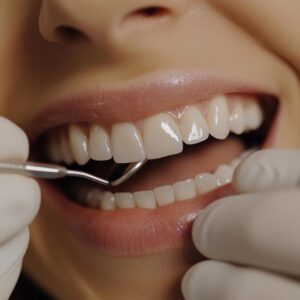
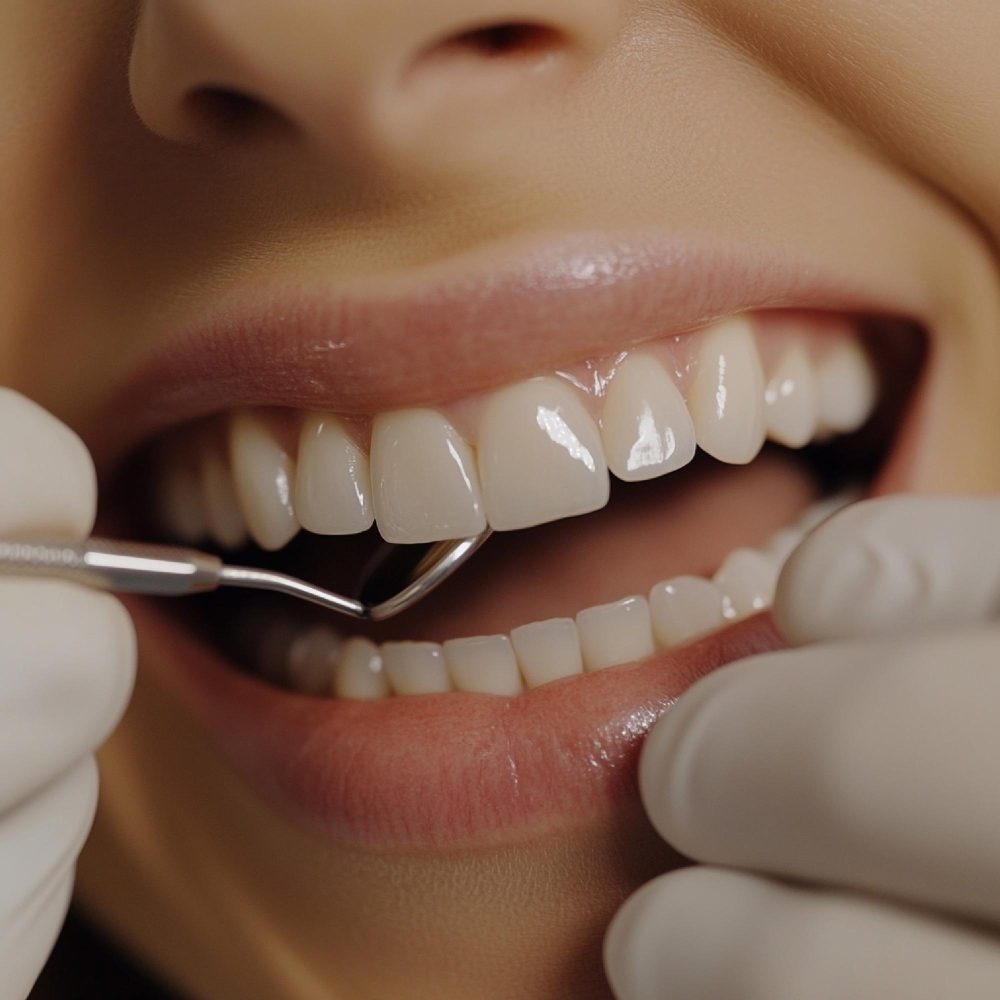
Yes. In selected cases, ultra-thin veneers can be placed without shaving the teeth or with only minimal preparation. However, the decision should not be based on the patient's preference alone. Tooth shape, projection, color, alignment, bite, and the amount of space available for ceramic all determine whether No-Prep Veneers are appropriate or whether minimal preparation can provide a more natural and aesthetically balanced result.
They are generally more suitable for relatively small teeth, teeth positioned slightly inward, minor gaps, or cases where a limited amount of volume needs to be added to the tooth.
However, when teeth are prominent, crowded, or severely discolored, placing veneers without creating sufficient space may make the teeth look bulky or overly prominent. In such cases, minimal and enamel-preserving tooth preparation may provide a more natural result.
When patients hear the term "tooth shaving" before getting veneers, one of their first questions is often whether they can achieve a new smile without removing any part of their natural teeth.
The answer is not simply yes or no. Modern adhesive dentistry and ultra-thin ceramics have made it possible to create extremely thin veneers for selected patients, but successful treatment depends primarily on proper case selection.
For patients considering veneers in Istanbul, Taksim Clinics provides cosmetic dental assessments to determine whether No-Prep Veneers, Minimal-Prep Veneers, or another restorative approach is more appropriate. Tooth position, enamel, color, bite, and smile proportions should all be evaluated before treatment.
What Are No-Prep Veneers?
No-Prep Veneers are thin cosmetic shells bonded to the front surface of the teeth with little or no removal of visible tooth enamel.
They differ from conventional veneers, which usually involve carefully planned tooth preparation to create adequate space for the ceramic and allow better control over the veneer’s shape, color, thickness, and margins.
There is also an intermediate approach known as Minimal-Prep Veneers, in which only very small and selected areas of the tooth are prepared rather than removing a larger amount of enamel.
No-Prep vs Minimal-Prep vs Traditional Veneers
| Comparison | No-Prep Veneers | Minimal-Prep Veneers | Traditional Veneers |
|---|---|---|---|
| Tooth Preparation | None or almost none | Limited preparation in selected areas | More preparation depending on the case |
| Enamel Preservation | Very high | High | Depends on the amount of preparation |
| Masking Dark Discoloration | May be limited | Relatively better | Allows greater control over color |
| Protruding Teeth | Often unsuitable | May work in selected cases | Provides more room for contour correction |
| Small Gaps | Can be highly suitable | Suitable | Suitable |
| Risk of Bulky Appearance | Higher if the case is poorly selected | Lower with proper planning | Thickness can be controlled more effectively |
| Final Decision | Should be made after evaluating the teeth, bite, enamel, and cosmetic treatment plan. | ||
Who Is a Good Candidate for No-Prep Veneers?
No-Prep Veneers may be considered when the existing tooth shape allows a thin layer of ceramic to be added without making the teeth appear excessively large or protrusive.
Small Teeth
When a tooth needs a slight increase in width or volume, ceramic can sometimes be added without removing enamel.
Minor Gaps
Small spaces between teeth can sometimes be closed by carefully increasing tooth width with thin veneers.
Slightly Retruded Teeth
If the tooth is positioned slightly inward, there may be sufficient space to add ceramic without preparation.
Minor Shape Corrections
Thin veneers may improve the appearance of small, peg-shaped, or mildly disproportionate teeth.
Minor Edge Wear
Some cases involving limited loss of tooth structure may benefit from adding ceramic instead of removing additional enamel.
Healthy Enamel
Preserving healthy enamel provides a favorable bonding surface when appropriate adhesive protocols are followed.
When Are No-Prep Veneers Not Suitable?
One of the most common mistakes is assuming that No-Prep Veneers can be used for every patient. In some situations, adding ceramic without creating enough space can make the teeth look excessively prominent, thick, or unnatural.
Protruding Teeth
Adding ceramic to teeth that already project outward may make them appear even more prominent.
Significant Crowding
Rotated or significantly crowded teeth may require orthodontic treatment or carefully planned preparation before veneers.
Severe Discoloration
Ultra-thin ceramics are relatively translucent and may not adequately mask very dark underlying tooth color.
Naturally Large Teeth
Adding another layer without preparation can make already large teeth appear bulky or disproportionate.
Bite Problems
Certain bite relationships can place excessive forces on veneers and should be evaluated before treatment.
Teeth Grinding
Bruxism requires careful assessment and may require additional measures to protect veneers from excessive forces and fractures.
Are No-Prep Veneers Better Than Traditional Veneers?
Not necessarily. The term "no-prep" sounds attractive, but the absence of tooth preparation alone does not determine the quality of the final result.
The goal should be to use the least invasive treatment capable of achieving the desired healthy, functional, and aesthetic result.
If the correct shape, color, contours, and bite can be achieved without tooth preparation, preserving the enamel is an important advantage.
However, if avoiding preparation would create thick veneers, excessive projection, or margins that are difficult to clean, minimal tooth preparation may produce a healthier and more natural result.
Do No-Prep Veneers Look Natural?
Yes, No-Prep Veneers can look very natural when the patient is an appropriate candidate and the ceramic thickness, shade, translucency, contours, and margins are carefully controlled.
Problems may occur when a no-prep veneer is placed on a tooth without sufficient space. The teeth may then appear:
- More prominent than natural teeth.
- Too large for the patient's facial proportions.
- Thick near the gumline.
- Square or visually connected to adjacent teeth.
- More difficult to clean around the margins.
Can No-Prep Veneers Cause Gum Inflammation?
No-prep veneers do not automatically cause gum inflammation. However, excessive thickness, poor contours, or inappropriate margins near the gums can make plaque control more difficult.
For this reason, it is not enough for a veneer simply to be "no-prep." Its emergence profile and margins should be anatomically appropriate and designed to facilitate good oral hygiene.
Can No-Prep Veneers Be Removed?
Preserving enamel generally makes No-Prep Veneers a more conservative option than restorations that require removal of tooth structure.
However, veneers should not automatically be described as "100% reversible." Removing the ceramic and bonding cement requires a precise procedure, and even treatments described as no-prep may involve minor tooth modifications in some cases.
For a detailed explanation, read: Can Dental Veneers Be Removed? Results, Risks & Expert Guide .
Do No-Prep Veneers Require Anesthesia?
When no tooth preparation is needed, or when preparation is extremely limited, anesthesia may not be necessary in some cases.
However, this depends on the actual procedure, tooth sensitivity, gum condition, and individual patient needs.
How Long Do No-Prep Veneers Last?
The longevity of veneers does not depend solely on how much tooth structure was prepared. Important factors include case selection, ceramic quality, bonding to enamel, margin accuracy, bite forces, oral hygiene, and habits such as teeth grinding.
Therefore, published survival rates should not be interpreted as a guarantee for an individual patient.
Is Bonding to Enamel Better for Veneers?
Preserving enamel is an important objective when planning veneers because healthy enamel provides a favorable surface for adhesive bonding systems used with ceramic veneers.
For this reason, dentists generally aim to keep preparation within enamel whenever the clinical situation allows.
Can No-Prep Veneers Hide Yellow or Dark Teeth?
This depends on the severity of discoloration and the amount of ceramic thickness available.
Ultra-thin veneers are generally more translucent, which means darker underlying tooth color may remain visible. Increasing opacity can help mask discoloration, but it may also affect the natural appearance of the restoration.
Severe discoloration may therefore require carefully planned preparation to create enough space for ceramic capable of modifying the underlying color.
Can No-Prep Veneers Fix Crooked Teeth?
Very minor irregularities may sometimes be improved through cosmetic design. However, significantly rotated, protruding, or crowded teeth cannot always be corrected simply by adding veneers.
In these cases, orthodontic treatment—or a combination of orthodontics and veneers—may preserve more natural tooth structure than aggressively preparing teeth to camouflage misalignment.
Can No-Prep Veneers Close Gaps?
Yes. Certain small gaps are among the cases that may be particularly suitable for an additive no-prep approach because the treatment involves increasing tooth width rather than removing enamel.
However, the spaces must be distributed carefully so that one tooth does not become disproportionately wide compared with the rest of the smile.
Are No-Prep Veneers Suitable for Small Teeth?
Small or peg-shaped teeth are among the cases that may benefit from No-Prep Veneers because treatment primarily involves adding shape and volume rather than removing tooth structure.
Nevertheless, the dentist should evaluate tooth width-to-length proportions and the relationship between the teeth, gums, and neighboring teeth before treatment.
What Happens If No-Prep Veneers Are Used in the Wrong Case?
Excessive Projection
Adding ceramic over an already prominent tooth may create an unnatural, protrusive smile.
Bulky Margins
The transition between the veneer and the tooth near the gums may become too thick when insufficient space is available.
Cleaning Difficulties
Over-contoured restorations may create areas where plaque accumulates more easily.
Unsatisfactory Color
Very thin ceramic may not adequately mask significant underlying discoloration.
Oversized Teeth
The final teeth may appear too large in relation to the lips, smile, and facial proportions.
Less Natural Results
Preserving enamel is important, but successful treatment must balance dental health, function, and aesthetics.
How Does a Dentist Determine Whether You Are Suitable for No-Prep Veneers?
1. Teeth and Gum Examination
The dentist checks for tooth decay, gum inflammation, or other conditions that should be treated before cosmetic dentistry.
2. Tooth Position Assessment
Projection, retrusion, rotation, spacing, and available space for ceramic are evaluated.
3. Shade Analysis
The dentist determines whether an ultra-thin ceramic veneer can adequately mask the existing tooth color.
4. Bite Assessment
Tooth contacts and forces affecting the front teeth during function are evaluated.
5. Smile Design
The proposed tooth dimensions and contours are planned before deciding between No-Prep and Minimal-Prep Veneers.
6. Choosing the Most Conservative Preparation
If the desired result can be achieved without preparation, No-Prep Veneers may be considered. If additional space is needed, minimal conservative preparation may be performed.
Should You Choose No-Prep Veneers Before Seeing the Proposed Smile Design?
Treatment planning should not begin with the statement, "I want veneers without shaving my teeth." A more useful question is: What is the least invasive treatment that can achieve an appropriate result for my teeth?
Digital smile design, mock-ups, or other planning methods may sometimes help preview the proposed contours before making a final decision about tooth preparation.
Veneers or Zirconium Crowns?
Veneers primarily cover the front surface of a tooth, while crowns cover considerably more tooth structure and are used for different clinical indications.
Therefore, veneers and zirconium crowns should not be considered interchangeable treatments for every patient. The decision depends on the amount of remaining tooth structure, previous restorations, tooth color, bite, and functional requirements.
Read more: Veneers and Zirconium Crowns in Istanbul .
Is Tooth Shaving for Veneers Painful?
When tooth preparation is necessary, the amount is determined according to the individual case. Local anesthesia may be used when needed for patient comfort.
The goal is not to shave teeth unnecessarily, but to perform conservative and carefully planned preparation only where it is clinically required.
Do All Ultra-Thin Veneers Require No Tooth Shaving?
No. The thickness of a veneer alone does not determine whether tooth preparation is required.
Even when extremely thin ceramic can be fabricated, a dentist may need to remove a very small amount of enamel in selected areas to control projection, margins, or the path of insertion.
Therefore, the term Ultra-Thin Veneers does not automatically mean that every tooth can be treated without any preparation.
What Is the Difference Between No-Prep Veneers and Lumineers?
The term "Lumineers" is often used as though it were synonymous with all no-prep veneers. Clinically, however, the more important considerations are the preparation technique, ceramic thickness, material selection, and treatment planning, rather than the brand name alone.
Are No-Prep Veneers Suitable for Everyone?
No. This is one of the most important points to understand before choosing treatment.
Some patients are excellent candidates for No-Prep Veneers, while others may benefit more from Minimal-Prep Veneers, orthodontics, whitening, or another treatment.
How Many Appointments Are Needed for Veneers?
The number of appointments varies depending on the treatment plan, number of teeth, imaging requirements, smile design, mock-up or trial stage, and laboratory fabrication.
Treatment may generally involve assessment and planning, fabrication and try-in, followed by final bonding. The exact protocol varies from patient to patient.
How Should You Care for Veneers?
- Brush your teeth properly twice a day.
- Clean between the teeth using floss or another method recommended by your dentist.
- Attend regular dental and gum examinations.
- Do not use your teeth to bite or break hard objects.
- Tell your dentist if you grind or clench your teeth.
- Use a night guard if recommended.
- See your dentist if a veneer fractures, your bite changes, or persistent gum inflammation develops.
Related Articles You May Find Helpful
Want to Know Whether No-Prep Veneers Are Suitable for Your Teeth?
The answer cannot be determined by the name of the technique alone. Your tooth shape, shade, alignment, bite, enamel, and available ceramic space should first be evaluated. Contact Taksim Clinics in Istanbul to discuss No-Prep Veneers, Minimal-Prep Veneers, and other cosmetic dental options based on your individual needs.
WhatsApp: +90 534 445 94 44Conclusion: Can You Get Veneers Without Shaving Teeth?
Yes. Veneers can be placed without tooth shaving in selected cases, particularly when the goal is to add volume to small teeth, close minor gaps, or improve the shape of teeth whose position allows ceramic to be added without creating excessive projection.
However, No-Prep Veneers are not the right solution for everyone. Prominent, crowded, or severely discolored teeth may require minimal preparation or a different treatment plan to achieve a healthier and more natural-looking smile.
The goal should therefore not be to avoid tooth preparation at any cost. Instead, treatment should preserve as much healthy enamel as possible while achieving appropriate tooth shape, color, margins, and bite.
For patients considering veneers and cosmetic dentistry in Turkey, Taksim Clinics in Istanbul offers assessment for No-Prep and Minimal-Prep Veneers and other cosmetic dental treatments.